
What to Eat Before a Half Marathon: Fueling for Peak Performance
Deciding what to eat before a half marathon can change your entire race experience.
I’ve now run 16 half marathons (and 12 marathons, but who’s counting?), and I’ve fine-tuned my fueling technique. I’m sharing my expertise, personal insights, and essential tips for maximizing your pre-race fueling.
Let’s get right to it so you know exactly what you should eat before your next big race.
What to Eat the Night Before a Marathon
The jitters may begin on the eve of your half marathon. Have no fear!
Being strategic in your meal choice the night before your race will significantly impact your run. You’ll want to eat a balanced meal to fuel your body for success.
🍽️ Your pre-race dinner should include:
- Complex Carbohydrates (pasta, rice, white bread)
- Proteins (chicken, tofu)
- Healthy fats (avocado, nuts)
Complex carbohydrates are essential for sustaining energy during the race. Lean protein, such as chicken, can help repair muscle tissue. Healthy fats help the body absorb essential nutrients.
❌ Avoid:
- Hard-to-digest foods
- Heavy foods
- High-fiber foods (in excess)
Heavy foods will prevent you from getting quality sleep before the race. Likewise, foods with lots of fiber, or simply too much fiber in one meal, can cause gastrointestinal distress (read: spending race morning in the porta-potty).
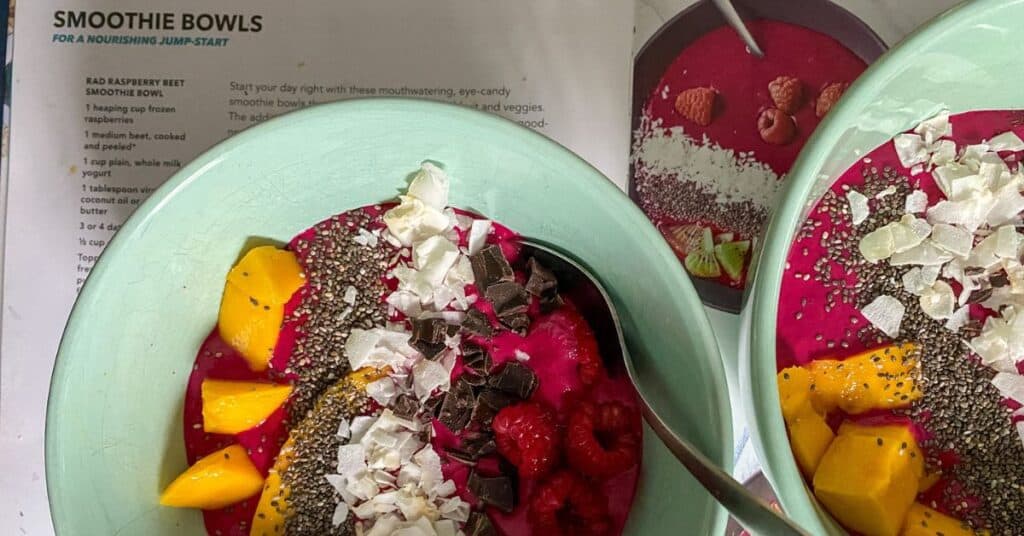
While you want to limit your fiber intake, including some vegetables in your dinner is still necessary. This helps your body get essential vitamins.
Remember that hydration is also key for a successful race day. Let your thirst guide how much you drink, and aim for your urine to be pale.
Don’t drink too much, though, or you’ll have a restless night with multiple trips to the bathroom.
Ultimately, you should experiment throughout your half-marathon training cycle to find what foods work best for your body. On nights before your long run training sessions, test out a variety of meals.
Your body will let you know what it wants. Listen to it!
What to Eat Before Running a Half Marathon
First and foremost, nothing new on race day. This simple advice can go a long way to help you avoid a bad race day.
When looking for what to eat the morning of your half marathon, you should once again enjoy a balanced meal. Easy-to-digest carbohydrates, protein, a little fiber, and fat are ideal.
Some runners enjoy:
- Banana and peanut butter
- Bagel with a little cream cheese
- Oatmeal with some fruit
My personal go-to half marathon breakfast is a peanut butter and banana sandwich (with two slices of white bread). If I wake up feeling extra hungry, I’ll eat a bowl of oatmeal with honey and banana.
Going with one of these options should properly fuel you without weighing you down. It should also help you avoid digestive issues.
Remember also to hydrate before the race starts. This is where you need to be aware of how your body responds.
I find that roughly a quarter cup of an electrolyte drink (my choice is Nuun) is enough pre-race to start my hydration without sending me to the bathroom every mile on the course.
Snack or Meal? What’s Best
While I hate to say you need to know your body for the best answer here, it’s the honest truth.
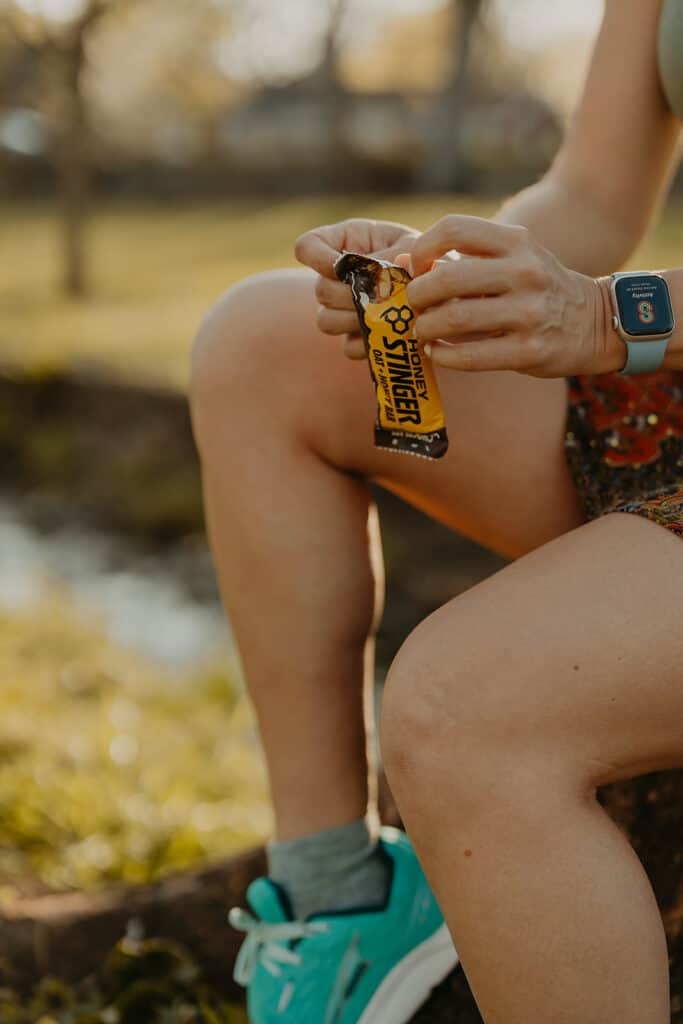
My dear running buddy Rebecca never eats before a race or a long training run. My boyfriend also rarely eats more than a Honey Stinger Waffle pre-race.
Me, on the other hand? I need to fuel with a complete meal before a half marathon. Nothing is worse for me than starting a race with hunger pangs.
Test out what might work best for you on your long-run days. One week, you can try a small snack like an energy bar or a simple banana. The following week, test a balanced meal like a bowl of oatmeal with fruit.
Your best plan is the one that allows your body to be sufficiently fueled and comfortable for your race.
How Much Time Before a Half Marathon Should I Eat?
As with everything in the running world, knowing what works best for your body is essential. During your training cycle, test out the timing of your pre-race meal.
Most runners will need at least one hour before the race to have enough time to digest and fuel up. Aiming for two hours is even better.
Remember only to eat foods that you’re familiar with. Then, you’ll know what to expect from your body and how the food will impact you over the next several hours.
You must ultimately fuel your body to the best of your ability without crossing the line. A honed-in pre-race fueling plan will help you have the best race day experience.
How to Fuel During a Half Marathon
Some runners find that their bodies require fuel during the half marathon distance to maintain energy. Others find their pre-race meal allows them to endure the 13.1 miles.
Great options for running fuel during your miles are easily digestible carbs. These often come in the form of energy gels or chews.
Sports drinks that provide electrolytes will also help your body get quick energy.
A good rule of thumb is to take energy at least every 45 minutes to an hour, depending on your body’s needs.
I like to simplify things, so I’ll take an energy gel at miles 5 and 10. I regularly check in with myself to see if I need more fuel or hydration.
Remember to take small sips of water or electrolyte drinks to avoid cramping from a stomach full of liquids.
What to Eat After a Half Marathon
Fueling your body before and during the half marathon is essential for a great race experience. Proper fueling after the race is necessary for an easy half-marathon recovery.
Once again, aim for a balanced meal following the race. If you don’t feel hungry immediately (which I often struggle with), eat a high-quality snack within 30 minutes to an hour after the race.
You’ll want to have something that has a good blend of carbohydrates and proteins.
While I’m not always hungry following a half marathon, I am always happy to drink a bottle of chocolate milk. It is the ultimate mix of carbs and protein with some sugar to help replenish your body.
The carbohydrates will help refill your energy stores, while the protein will help with muscle recovery.
Now is also the time to rehydrate. While many runners reach for a beer after the race, you’ll want to have some water and electrolytes to replace what your body lost from sweating during the 13.1 miles.
Always listen to your body and find what works best for it. Feed it well post-race and watch your recovery become much more manageable.

Eat only foods that you’re familiar with that have proven easy on your stomach during training. Include carbohydrates, protein, and some fat. You also must eat your pre-race meal at least 1-2 hours before the half marathon begins.
Avoid any foods that you didn’t eat during training before training runs. You should also avoid eating foods that are hard to digest, overly heavy, or foods that contain too much fiber.
The morning of the half marathon is not the proper time to carb load. Instead, you should aim to carb load during the final 48 hours before the race. Don’t overindulge in carbs; you want to keep your body well-balanced.
If you’re a regular coffee drinker who would drink coffee before a long run during training, you know whether your body can handle pre-race coffee. If you haven’t previously drank coffee before running, beware. The caffeine could send you straight to the bathroom.
Final Thoughts: What to Eat Before a Half Marathon
Although there’s no one-size-fits-all answer to this question, there are some basic guidelines. The most important thing is to find what works best for your body during training.
Training for a half marathon isn’t only the action of running miles and cross-training. Learning to fuel your body the way it desires is also a part of the training cycle.
Lock in your pre-race fueling game plan, and you’ll rock the miles on race day.


