
Running After Eating: Rules to Follow for the Best Results
Running after eating can be a complex concept to grasp.
You might be able to run right after eating a big meal without any problems. Alternatively, running so soon after eating a small meal might cause you a slew of problems and discomfort.
Because runners are all built differently, what works well for one person will only sometimes work for the next person. So let’s jump in and review the things that could help you on your next run after eating.
Is Running Right After Eating Unhealthy?
Running immediately after eating is not generally deemed unhealthy. However, it does often make for an uncomfortable experience.
It’s best to optimize your food consumption to benefit your running. This means eating the proper foods at the correct times.
When you eat too close to the time you run, issues may arise.
What Matters When Running After Eating
Here are a few things to consider when picking something to eat before a run.
1. How long will you be running?
The length of your time running matters a lot when deciding what and when to eat. This is because you’ll need enough energy to get through your run.
Are you not feeling hungry and expecting to run for less than an hour? If you don’t feel hungry, you can head out the door without eating first.
If you’ll be running longer than an hour, fuel up first. Two or three servings of carbohydrates and a serving of protein and fat will help fuel you for your run.
2. How intense will your run be?
Are you training with running repeats? Is today the day of your big race?
If the intensity of your run is high, avoid eating and running soon after. However, providing your body the time necessary to break down the food and convert it to energy will benefit your running efforts greatly.
I’m sure you can imagine the discomfort of running sprints on a full stomach. Ouch.
3. How has your body responded in the past?
This is a big one.
Because everyone’s body functions differently, testing is the only way to know what and how soon you can run after eating.
This means finding the perfect balance of how much you can consume, what you can consume, and how soon after you can start your run.
The good news is that testing these elements will help you know best what to eat and drink before an important race.
What Can Happen if You Run Too Soon After Eating?
An array of things might happen if you eat too close to the time you begin to run. These are not limited to but might include the following:
👎🏻 You’ll get cramps and side stitches.
This is common among runners who eat and then run.
Eating a big meal and then taking off for a run might not hit you with cramps immediately. However, you might soon find intense abdominal pain from running on a full stomach.
👎🏻 You may vomit.
This happens to my boyfriend when he runs too soon after eating.
Running with a full stomach can be uncomfortable or painful and may lead to you throwing up. It’s not fun to throw up while running, so eat well before the time you need to be running.
👎🏻 It’ll slow you down.
This is one of the lesser drawbacks, but it’s still an issue you might experience.
Because your body is working to break down and digest the food you had before running, you’ll likely not be able to run at your quickest pace. So whether or not you’re also experiencing cramps or nausea, you’ll probably find you need to slow down to run.
Can You Run on a Full Stomach?
Technically, you may be able to run on a full stomach as all bodies respond differently to eating and running.
Although you might be able to run on a full stomach, you’ll probably find that running is much more enjoyable if you allow your body ample time to digest.

Waiting a bit to run will help you avoid stomach issues like cramps and side stitches or even vomiting on the run.
How Long Should I Wait to Run After Eating?
For the best experience, you should wait to run until the food you consumed is no longer present in your stomach before you begin to exercise.
But how long does this take?
It’s typical for food to remain in the stomach for anywhere from 40 to 120 minutes. Following the stomach, it spends a similar amount of time digesting in the small intestine.
If you’re eating food with more fats and proteins, you can expect this process to take even longer. This is why it’s essential to identify what food works well for you before running.
Additionally, studies have found that blood flow increases to the digestive tract significantly, especially after a big meal. The peak occurs within 20 to 40 minutes and continues for one and a half to two hours.
Our bodies rely on blood flow to muscles and internal organs like the heart during exercise. Increased blood flow to the digestive tract could detract from your running.
If you eat a large meal before a run, you’ll need to allow more time than if you ate a small meal.
✅ The general breakdown is to allow two to four hours after eating a large meal, one to two hours after a small meal, and 40 to 60 minutes after a snack before running.
Following this general guideline and what works well for your body will ensure the best results for your workout.
Can You Run 15 Minutes After Eating?
We’ve determined that waiting a minimum of 40 minutes is necessary. But you really want to run after just 15 minutes after eating. Can you do it?
It could lead to gastrointestinal issues for you. But it could be perfectly fine for you.
The only way to know for sure is to test and learn how your body responds.

I don’t suggest eating a big meal right before a significant run, whether it’s a hard training session or a big race like your first half marathon.
But if you have the wiggle room to test the waters and see how your body responds, this is the opportunity to know how your body will react when the stakes are low. Then you’ll know exactly what to eat on race day.
What Are Good Snacks to Eat Before Going for a Run?
If you want a light snack before a run, knowing what to eat will help fuel your efforts.
Carbohydrates, fats, and proteins are all elements to consider when looking for the best food options before running.
Carbohydrates are essential for running because carbs supply the muscles with energy, filling our glycogen stores and helping the body to carry out an intense activity.
Simple carbohydrates are best before running because they quickly break down and become energy.
The amount of time you’ll be running changes the requirement for carbohydrates.
If you’re going to run for less than an hour and want a small snack before you run, focus on a serving of carbohydrates and a little bit of protein and fat. Some options include:
👍🏻 A banana with peanut or other nut butter.
👍🏻 Toast or a bagel with peanut butter.
👍🏻 Dried fruit with nuts.
👍🏻 Yogurt with fruit.
👍🏻 Energy bar.
If you have a sports drink before your run, consider the carbohydrates you’re getting. For instance, my favorite running energy drink has 4 grams of carbs, while other sports drinks can have 35+ grams.
👉🏼 It’s best not to consume much fiber before running, be wary of energy bars and certain fruits, and consider their fiber content.
You should also know these pre-run snacks might not work well for your body. Therefore, testing what works best is the only way to learn. So it’s best to try before a training run with low expectations.
How Many Calories Should I Eat Before a Run?
If you want to run soon after eating, you’ll want to limit your calorie intake.
As discussed above, a banana with peanut butter can be a great pre-run snack about 40 minutes to an hour before you run.
A banana is about 100 calories, and half a serving of peanut butter is about 100 calories. This makes this an outstanding balance of carbohydrates, protein, and fat, all within 200 calories.
Keeping your pre-run fuel around 200 to 300 calories and allowing enough time to digest will help you avoid gastrointestinal issues while running.
What I Eat Before Running
I need to improve my strategy of fueling and running, but what I currently do has worked reasonably well for me.
Before a Short Run
I usually need something in my system when I head out for a short run in the morning.
This is when I’ll eat a Honey Stinger Waffle and drink about four ounces of water. This is how I usually fueled before running two miles every day in January 2023.
I can generally head out the door within 10 minutes of eating a waffle without worrying about gastrointestinal issues during the run.
I also eat this before running a shorter distance race, like a 5k or 10k. Eating a Honey Stinger Waffle about 40 to 60 minutes before a race no further than the 10k distance sustains me well.
Before a Long Run
If I go for a long run, I know I must fuel myself with more calories.
My favorite pre-run small meal is a slice of bread with peanut butter and a sliced banana. This can fuel me for a long run of 10 miles or more.
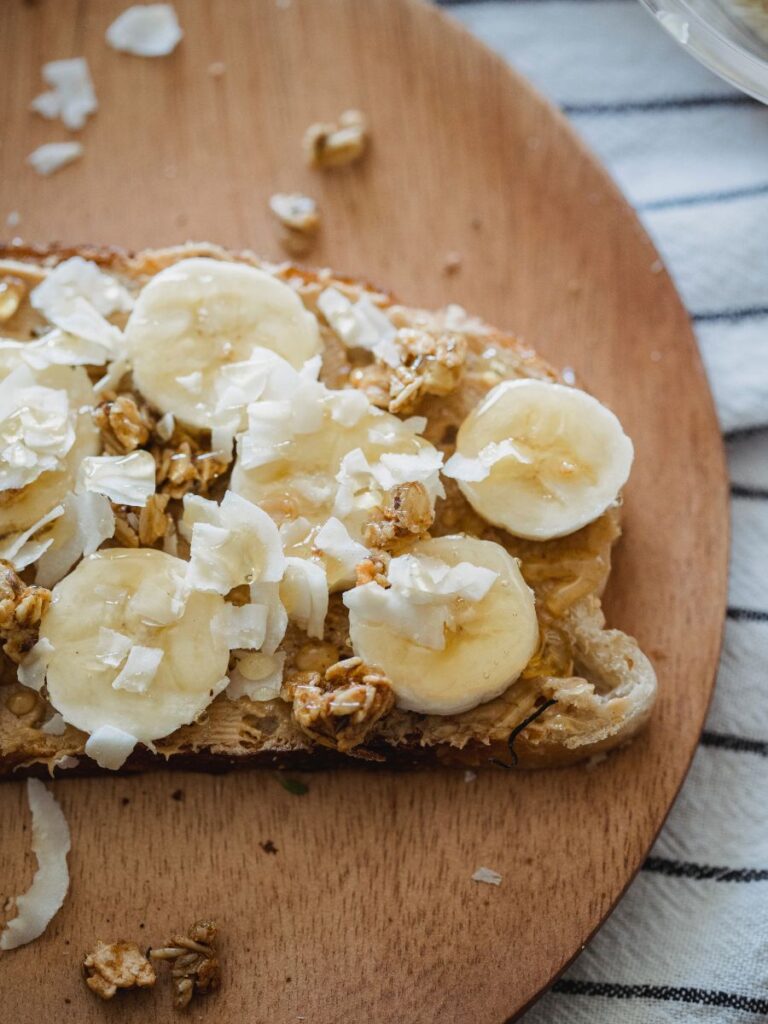
If I’m in the stages of marathon training and running a 20-mile long run, I’ll use two slices of bread to make it a sandwich. Extra calories and extra convenience!
Before a Race
I’ve recently discovered I really enjoy tasty overnight oats before a race. It’s quick to prep and can be done with countless flavors.
In the fall of 2022, I started making overnight oats inspired by banana nut bread. This recipe consists of oats with yogurt, cinnamon, vanilla, and maple syrup, topped with walnuts and fresh berries. So good.
Before a long-distance race, such as a half marathon or marathon, I’ll eat my overnight oats about one and a half hours before the start of the race. This gives me lots of time to digest and create the energy needed for the race.
Final Thoughts: Running After Eating
Whether you’re wondering when to eat before your long training run or your first marathon, knowing what works best for you is essential. Test different foods before any critical runs, and remember to allow at least an hour between eating and running.
Allowing your body proper fuel time will elevate your overall running experience.


