11 Best Benefits of Running Compression Socks + 3 Great Options
Running compression socks are a popular choice for many runners.
They can provide compression to the calves, ankles, and feet, which can help reduce fatigue, improve circulation, and aid in muscular recovery.
Compression has existed for some time, but compression running socks have become increasingly popular among marathon, trail, and ultra-marathon runners due to their compression benefits.
Here we’ll discuss why you should wear compression running socks during and after your next long run.
Should You Wear Running Compression Socks While Running?
Whether compression running socks are necessary is highly debated amongst runners.
Generally, compression running socks are not essential in every runner’s gear closet. Some runners may find them too hot and uncomfortable to wear during runs.
However, compression socks provide compression benefits that many runners do enjoy.
Whether you should or should not wear compression socks for running will come down primarily to personal preference. Compression calf sleeves (rather than full-length socks) and compression arm sleeves are other options for runners.
You should discuss options with your doctor to ensure you get the best fit if you have any pre-existing issues, especially with circulation.

11 Top Benefits of Compression Socks for Running
Compression socks can be highly beneficial during and after long runs, as compression helps reduce muscle fatigue and increases blood flow to help muscles recover faster after a run.
Compression may even prevent cramping in muscles prone to cramping.
Here are the 11 top benefits of wearing running compression socks as a runner.
1. Improves circulation.
Compression squeezes the area to return the blood to the heart. This can be especially helpful for runners spending a lot of time on their feet, whether running or not.
2. Prevents deep venous thrombosis.
Studies suggest compression can help prevent the development of asymptomatic deep venous thrombosis, even for high-risk patients.
3. Decreases vibration in the leg muscles.
When the compression sock or sleeve constricts your leg, your calf muscle will have a less intense bounce or vibration when landing. This means you’ll use less energy to stabilize the muscles.
4. Keeps muscles warm.
Warm muscles are muscles that function well in action. This is the concept behind a pre-run warm-up. Compression socks can help keep the muscles warm and ready to run your race.
5. Practical for racing and recovery.
When you buy compression socks, they’re helpful for more than just racing. For example, many people like to wear them during long flights to prevent blood clots or for workers who spend most of the day on their feet, such as nurses.
6. Speeds up recovery time.
Wearing compression socks post-race is one of the best things you can do to recover quicker. Boosting the circulation in your legs helps you spend less time walking around with stiff legs.
7. Decrease soreness.
Some studies show that muscle fatigue and soreness dissipate using post-run compression socks. This can explain why recovery time is diminished with use.
Compression socks may also help relieve the pain associated with plantar fasciitis.
8. Functions as a layer on cold days.
Compression socks may serve you well if you don’t enjoy running in cold weather. This added layer is skin-tight and can fit comfortably under your running tights, keeping you cozy.
9. Protects your legs from harmful sun rays.
On sunny days you need to be sure your skin is protected. Compression socks can be a great layer to keep harmful rays off your skin.
10. Look stylish.
If you’ve yet to look at the various options for running compression socks, you might not know the colors and styles available. Compression socks might be your next favorite running accessory if you like to look stylish on the run.
11. Make the legs more aerodynamic for racing.
While not explicitly proven, some believe that compression socks may create an aerodynamic response from the pressure on the leg muscles. It’s a good enough reason to try a pair during your next training run, whether true or the placebo effect.
These are some of the most notable benefits of running compression socks, but you may experience different results.
When Runners Should Wear Compression Socks
There are two best times for runners to wear compression socks.
1️⃣ Compression socks should be worn during long runs or races.
2️⃣ Compression socks should be worn for recovery after a long run or race.
All in all, compression running socks can benefit runners of all levels if they choose to invest in them.
Using compression socks while running is entirely up to personal preference; however, this running resource may only make sense after experiencing the benefits.
💡 It’s generally not recommended to wear compression socks when sleeping. Compression intends to improve circulation up from the feet, but this issue doesn’t exist when lying down.
The 3 Best Compression Socks for Running
There’s an incredible variety of brands and styles of compression socks for running. It can be overwhelming trying to find the best one.
So we found the three top brands (including my all-time favorite!).
The following are top-choice brands that sell a variety of options, from compression calf sleeves to full-length compression socks.
✅ CEP Compression
CEP Compression makes my favorite compression running socks and calf sleeves.
I like CEP because their socks and compression sleeves have never fallen during a run. I’ve owned pairs for years and worn them through various marathons, but they continue to provide excellent compression.
The photo below is me crossing the finish line at the Nashville 1/2 Marathon in 2022, earning a PR of nearly three minutes. I wore my CEP Compression calf sleeves for this race.
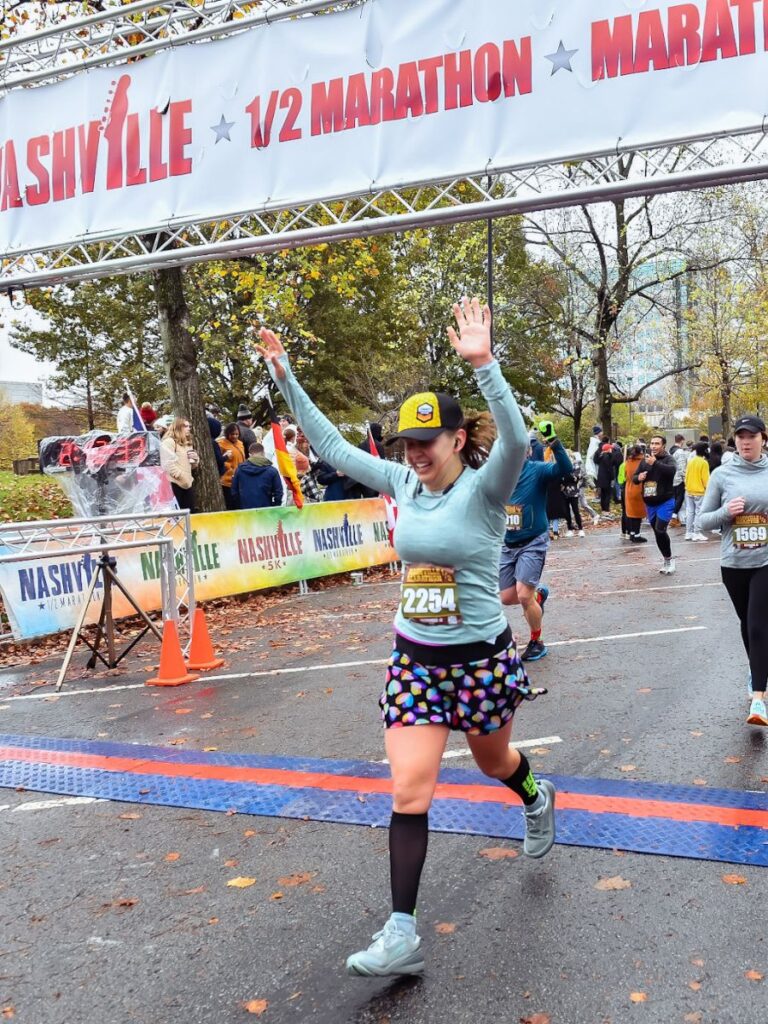
Before this race, I had run two other half-marathons within the last 40 days.
I didn’t wear compression socks or sleeves during those races, so I genuinely believe compression enhanced my running performance at the Nashville Half.
✅ Sockwell Compression
Sockwell Compression has been around for over a decade, and their knack for quality is recognized in the running community.
⭐️ Sockwell has several top-rated compression socks at REI, including many with a 4.9-star rating or higher. These are compression socks you can trust.
People note that Sockwell compression socks are great for long flights and for preventing swelling. Reviewers also say they’re easy to get on and off – which isn’t true for many running compression socks.
✅ PRO Compression
PRO Compression has been at almost every race expo I’ve attended. This brand might be the runner’s choice of compression socks for many reasons.
⭐️ With a 4.4-star rating and over 500 reviews, investing in PRO Compression socks is a solid option for any runner looking to use compression.

PRO Compression is a large brand, so the options for fun patterns and styles are endless. Many reviewers mention that these were excellent for post-race recovery.
Finding Your Compression Sock Size
To have the best experience with compression socks, you must record the right size for your foot and lower leg.
Each brand has a unique sizing guide, so follow the chart they provide. A sewing tape measure (the soft kind of tape measure) will help you get the most accurate reading of your calf muscle.
If the compression sock is too tight, you’ll experience circulation issues. If the sock is too wide around your calf, it’ll continually fall while you run. (Annoying!)
You’ll also want to note if the brand has differing sizes for men and women.
FAQs:
Yes, some marathon runners wear compression socks during a race. Compression socks can help reduce fatigue and increase circulation, making them popular among long-distance runners.
However, not all runners use compression socks during their race, as the benefits may be limited or nonexistent for some people.
Yes, some elite runners wear compression socks while running.
Looking at a start-line photo of big races like the Boston Marathon, you’ll find at least a few elites wearing compression socks. Retired silver medal Olympian Meb Keflezihi wore compression socks to countless races, including at his win in Boston.
Yes and no. While compression socks may benefit some runners, they may not do much for others.
Compression socks are generally believed to reduce fatigue, increase circulation, and speed up recovery time; however, the degree of benefit varies from person to person.
No scientific studies have proven that compression socks help heal shin splints, but compression socks may benefit athletes who suffer from shin splints and experience discomfort while running.
Compression socks can provide compression and cushioning to the area to make it more comfortable while recovering from an injury.
Graduated compression means that most compression exists in the ankle area. The compression intensity decreases as the compression sock or calf sleeves travel up the leg. This helps guide blood from the ankle upward.

Final Thoughts: Running Compression Socks
Running compression socks can be a great addition to your running gear and wardrobe. They may help provide some benefits, such as reducing fatigue and speeding up recovery time.
Whether compression socks are for you or not is something you can only decide after trying them out for yourself. I’ve switched between wearing them and not wearing them. Each time I return to them, I reap many benefits from the compression.
Pick up a pair or two and see if compression socks make a difference to your running!


