
Running in Snow? 8 Tips and Tricks You Need to Know

Running poses many challenges whether you’re a new or everyday runner. Running in snow is just one of the many possible obstacles you’ll face as a runner.
Obviously, this is only true if you live or plan for a race in a place where it snows. My running journey actually begins with running in the snow. Sort of.
While I technically ran track on the youth community track team in the summer before 8th grade, I really became a runner on my high school’s winter track team.
I didn’t love running then, per se, but it did help me become the runner I am today. Part of that experience included running in the snow through the New Jersey winters.
I’ve run quite a few snowy miles and learned a thing or two (like that chafing is still highly possible in winter!). To this day, I prefer a chilly, snowy run over a hot and humid summer one. So let me help you learn to love the cold running days!
Top 8 Snow Running Tips
As someone who grew up in New Jersey and began my running journey on the winter track team, here’s my advice to help you enjoy cold weather running. These tips will improve your relationship with running in the snow.
1. Dress for the Temperature
Your best defense from the cold is the clothes you wear running.
Dressing for a run can be challenging, regardless of the weather.
Cold weather running means needing to wear layers for most runners. And don’t forget the windchill can make the temperature feel much colder than what your phone weather app displays!
The most important element of running clothes is that they must be moisture-wicking. Cotton can be a warm layer for running, but the layers that directly touch your skin need to pull the sweat away from your skin.
You can count on post-run chafing pain if you wear a cotton shirt as your base layer.
What to Wear Running in the Snow
Proper winter running gear for cold, snowy runs looks something like this:
✅ Moisture-wicking singlet
A base layer that’s comfortable against your skin is the ideal way to have a good run. I prefer a layer like a singlet because my arms don’t require as much coverage as my core to keep my body warm.
✅ Long-sleeve moisture-wicking shirt
I layer a long-sleeve moisture-wicking shirt over my singlet next. This is the base layer for my arms but an additional layer to keep my core comfortable.
✅ Running jacket
For especially cold runs, a running jacket is a great additional layer.
Because I tend to run warmer, I occasionally layer with my running rain jacket. This is ideal for those snowy, slushy run days.
✅ CW-X running leggings
CW-X Leggings are my favorite running leggings. They are high-quality and will last you years of cold weather runs.
There are options for all runners, including those needing additional stability and those running in freezing temperatures.
✅ Injinji running socks
Injinji socks are the ideal running sock, no matter the weather.
Injinjis will help your feet stay warm, dry, and blister-free even in the cold. Look for the Merino Wool-made Injinji socks to keep your feet most comfortable on the run.
✅ Altra Running Shoes
My favorite running shoe is the Altra Torin. But really, any Altra shoe that suits your needs is ideal for cold-weather running.
Altra trail running shoes can be paired with nearly any aftermarket ice spikes to increase traction when running in the snow.
✅ Gloves
Keeping your hands warm is an important part of staying comfortable while running.
While I don’t need to wear gloves in weather as cold as 35ºF, my boyfriend needs to wear gloves as the temperatures start to dip into the lower 40s. Know your body and limits to be sure you’ll stay warm and comfortable.
✅ Balaclava
A balaclava might be your favorite running gear if you’re running on a particularly frigid or windy day. This item allows you to see while covering nearly your whole face. This is also a great way to avoid collecting icicles on your nose and eyebrows.
✅ Sunglasses
Consider reaching for a pair of running sunglasses when heading out in the snow. Sunglasses protect your eyes from UV rays that are especially harsh during winter.

2. Upgrade Your Traction
Your regular running shoes might be fine if you’re running on fresh snow with a powdery texture.
However, if a layer of ice sits below that snow, you might find yourself on the ground, ending your run sooner than planned. That’s why adding extra traction to your shoes is ideal for making the most of those snowy runs.
YakTrax is helpful for runners who run in the snow and ice. A pair of these quickly attach to your running shoes, making every step safer than without. We’ll dive a little deeper into these later.
3. Warm-up Adequately
A warm-up is a good idea before any run, but it’s essential in cold weather.
Several scientific studies have shown why warming up the muscles before running is necessary. Reasons include reducing the risk of exercise-induced bronchoconstriction (EIB). Occasionally called exercise-induced asthma, EIB is the constriction of the airway that makes it difficult to breathe.
If you’re trying to run quickly in the cold (such as at a race), a warm-up will help improve your running ability by improving your breathing.
4. Use Anti-Chafe Balm
You might know that an anti-chafe balm or salve is important during the hot months. But I’ve actually experienced the worst chafing during winter.
Women might find they chafe on the sports bra line during cold weather runs. This is a great area for anti-chafe balm. Men often find that applying anti-chafe balm to the nipples is helpful in preventing painful post-run showers.
5. Adjust Your Expectations
If you usually run a 10-minute mile, recognize that might not be possible when running in the snow. Slowing down your running pace will help you maintain traction.
Adjusting your running expectations isn’t just a good idea; it’s essential. If you’re trying too hard to push your pace, you’ll more than likely end up on your back. Slipping and falling on black ice during a run is not enjoyable and is an easy way to end up injured.
6. Pay Attention to Your Heart Rate
Running in the cold means that you will likely experience a higher heart rate.
Always speak with your doctor and complete proper testing to ensure a healthy heart before beginning any exercise routine. But note that the cold weather will increase your heart rate, so keeping your eye on it can help you manage your output.
7. Be Prepared for Varying Post-Run Soreness
When running on surfaces that aren’t sturdy, like the sidewalk or pavement, you can expect your body to compensate and use different muscle groups.
Runners who frequent beaches for their miles will be familiar with this. Soft sand and snow can create a situation where you’re using different muscles and muscle groups to balance your body.
Be prepared following your run to be sore in places that aren’t generally sore.
8. Work with a Certified Running Coach
A running coach can help you understand your best options.
As a runner, you might be someone who pushes too far when you really should pull back. A coach wants what’s best for you and can tell you when you should concede to running on the treadmill instead of outside.
Of course, a coach can provide you with training plans for any race distance you want to run. But they also become your best running buddy to help you make the right choices throughout your training cycle.
Is Running on Snow a Better Workout?
You might wonder if running on snow is an even better workout than on flat ground.
After all, if you’ve ever talked with someone who runs on the beach, you’ve likely heard about how the soft sand makes the workout much more intense.
The reality is that running on snow is hazardous without proper preparation and caution. The threat of falling and ending up with running injuries makes running on snow a significant concern.
The better workout is whatever allows you to complete your miles safely.
Several studies have shown a correlation between weight loss and colder temperatures. With this in mind, running in the snow is likely a better workout compared to running on warmer days.

Snow Running Shoe Guide
If you know you’ll be spending miles running in the snow, be prepared with the best running shoes for winter.
Elements to look for in quality winter running shoes include:
👉🏼 Quality traction
You shouldn’t be running snowy miles in worn-out shoes.
You need enough tread to provide you with the traction necessary to stay upright. Trail shoes are a good option for runners who know they’ll be running in the snow.
👉🏼 Water-resistant
Look for running shoes that have water-resistant qualities. This will ensure that your feet stay dry if you end up running through slushy snow.
👉🏼 Warmth
While most running shoes aren’t lined with a warming material like fleece, be sure that your shoes don’t provide too much airflow that can lead to freezing feet.
Airflow in athletic shoes is important, but too much, and you’ll need to wear multiple pairs of socks.
👉🏼 Additional elements
Be sure to get running shoes that will work with aftermarket snow and ice spikes. YakTrax is a popular brand that many winter runners choose.
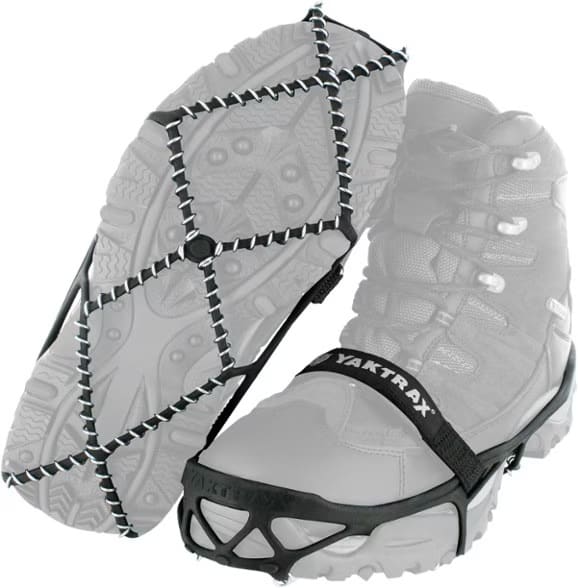
YakTrax Pro Traction
Why I Prefer Running in Cold Weather
If you’re like me, running causes your internal temperature to rise quickly in hot weather. This makes pushing a fast pace for long distances during the summer months challenging.
On the other hand, running in cold weather means I can run further and faster without additional exertion. When I’ve found myself marathon training through the hot summers, fall and winter races automatically feel easier.
If you’ve run a race in warm weather and hated it, don’t give up! My advice is to try running that distance again during cooler months.
While dressing properly to run in the winter can be a challenge for me, it’s still a treat the first time I can head out in cool temperatures for the season.
FAQs
It’s okay to run in the snow if you’re taking precautions. You must be properly dressed for the weather to avoid issues like slipping and falling or experiencing hypothermia. However, running in the snow is okay if you properly prepare for the weather.
Running in the snow always poses an added challenge. The safety of running in the snow comes from your level of preparedness.
Additional traction, proper clothes, and a safety plan will help make running in the snow safer. In addition to being concerned about the ability to stay upright while running, runners should be aware of the possibility of hypothermia. Wearing the appropriate warm layers can help prevent hypothermia in freezing temperatures.
People that run in the snow properly are well prepared. This means they dress for the cold temperature by wearing layers and remembering to wear gloves, warm socks, and a hat. In addition to regular cold weather gear, shoe traction devices such as YakTrax help to keep them on their feet rather than falling on slick snow and ice.
Running in the snow can be similar to running in the sand if the snow is freshly fallen and powdery. However, in many cases, snow may hide a layer of slick ice below it, creating a very hazardous experience for a runner. Running in snow and sand is similar in that you may find yourself using different muscles to balance your body.

Final Thoughts: Running in Snow
While I prefer to run in the cold temperatures of winter over the hot and humid summer days, I’m always extra cautious when running in snow. This is a major challenge for most runners and even more so for those not used to the element.
Remember these tips for running in the snow, and your winter runs will be successful.


